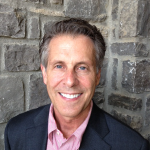
An Interview with Family Pride Corporation’s Rick Dover Regarding Senior Housing Needs

Rick Dover

Rick Dover

Since 1994, Rick Dover and his company, Family Pride Corporation, have been focusing on creating living accommodations for senior citizens in Loudon County, Tennessee. Today, Rick Dover explains why seniors have a different set of needs and what amenities they are looking for.

Information Nation: Thank you for taking the time out of your schedule to join us today.

Rick Dover: It is absolutely my pleasure.

Information Nation: We understand that for the last two decades you have focused most of your energies on building senior housing. Before we begin, can you tell us why that is?

Rick Dover: When my family and I were looking for an affordable living arrangement for my aging grandfather, we came up short. So, since I had a background in real estate development, I decided it was my duty to fulfill this very real need.

Information Nation: But, why Loudon County?

Rick Dover: I’m from Knoxville so I have known about and visited Loudon County all of my life. The town’s historic charm was beginning to deteriorate so I thought why not?

Information Nation: Finding senior housing is definitely stressful. What do you suggest for seniors just beginning their search?

Rick Dover: Do not do it alone. Make sure to have as much support as possible and look for a facility that has amenities for comfort, convenience, and practical living.

Information Nation: What sort of housing do seniors usually need?

Rick Dover: For independent living, I would say that seniors need a single level home. Many report to me that a small kitchen suits them just fine and an even smaller yard with just enough room for a bit of landscaping here and there is ideal.

Information Nation: What is the benefit of having a smaller house?

Rick Dover: Aside from possibly limited mobility, seniors are typically on a fixed income and a smaller home can equate to less money in utilities each month.

Information Nation: What about flooring?

Rick Dover: That’s a tricky one. Seniors definitely want flooring that looks good but also that isn’t slippery and is easy to clean.

Information Nation: And the lighting, we understand you tend to take special care with lightning?

Rick Dover: I do, that’s true. This is because, as seniors age, their eyesight may not be as it once was. Therefore, nice, consistent, bright light is an asset.

Information Nation: Do seniors have any specific requirements for counter space and storage?

Rick Dover: Seniors typically need more storage and plenty of counter space to spread out. Ample storage means there is less chance for clutter which not only reduces stress but untidiness is a safety issue as well.

Information Nation: What about laundry facilities?

Rick Dover: In my experience, seniors typically want a separate laundry room that is easily accessible from the kitchen.

Information Nation: Can you explain to us a little about the concept of aging in place?

Rick Dover: Essentially, aging in place means that seniors can remain in one general location and have access to ample services as they are needed. This may mean living in the same location from the early post-retirement years up to hospice and end-of-life care.

Information Nation: Many seniors choose to live in an organized facility. Can you explain a little about these arrangements?

Rick Dover: There are many different assisted and independent living facilities available. Independent living means that the senior essentially cares for themselves in all aspects but with a bit of oversight from nonmedical personnel. For seniors needing a bit more assistance, there are facilities that resemble apartment homes and may provide services such as housekeeping and transportation assistance. There are also skilled nursing and memory care accommodations available.

Information Nation: Is there any certain level of care that all seniors need?

Rick Dover: Senior needs are as varied as they are. Each individual will require a different level of care.

Information Nation: What about the social aspect of retirement. Do assisted living facilities help that?

Rick Dover: Absolutely. Many seniors elect to enter a retirement community for the social aspect alone. Many communities offer amenities such as game rooms and scheduled activities for older seniors who want to remain active.

Information Nation: Do you have anything to add about senior living arrangements?

Rick Dover: I would like to add that Family Pride Corporation takes great care to create facilities that are not only affordable but also memorable. We specialize in renovating historic buildings for the purpose of senior assisted living. We do this in memory of my grandfather and hope that our love of family shows in each renovation that we perform.

Rick Dover and Family Pride Corporation have been in existence since 1994. Along with his mother, Lucy, Rick Dover founded the company by refurbishing existing structures to create comfortable living space for the active and growing senior community of Loudon County.

Rick Dover lives in East Tennessee with his wife, Laurie.

Casa Sandoval Offers Advice for Encouraging Senior Family Members to Accept Care


Casa Sandoval

Casa Sandoval

Casa Sandoval provides assisted and independent living residences and onsite programs to encourage healthy, active lifestyles for all its residents.  Serving older adults since 1995, Casa Sandoval understands that seniors may resist entering a care facility for a myriad of reasons, including major feelings of loss that include loss of independence, loss of mobility, loss of ownership of their homes, and loss of their own decisions.

For those who are dealing with a loved one who is resistant to this transition, Casa Sandoval suggests taking an encouraging and supportive approach first.  While each situation is unique, Casa Sandoval recommends the following means for encouraging acceptance of care.

  • Understand various senior care options and be prepared to present options in a thoughtful and thorough manner.  There are many ways to research options. Casa Sandoval staff suggests: 1) Meet with and discuss questions and concerns with senior care professionals. This may include geriatric counselors, doctors, nurses, lawyers, Casa Sandoval staff, and social workers; 2) Talk to other caregivers who have gone through the same situation to get ideas and support.
  • Ask the family member what type of care he or she would prefer and honor his or her desires as much as possible, says Casa Sandoval.
  • Casa Sandoval suggests explaining the benefits senior care can provide, such as access to cultural and recreational programming, a social network, and onsite medical assistance whenever it is needed.
  • Explain that the motivation for senior care comes from a loving place, says Casa Sandoval, one that wants them to be safe, secure, and vital for as long as possible.

Casa Sandoval realizes that the safety and security of older family members is the top priority of caregivers, so it is essential that if safety concerns are evident or arise, the caregiver or family member seek immediate medical, legal, or police assistance.  For the senior adult who is experiencing significant cognitive issues, caregivers are encouraged to combine the above suggestions with advice from experts who are dealing with seniors, such as geriatric experts, advises Casa Sandoval.  The move to senior care can be difficult for some, acknowledges Casa Sandoval, but with persistent encouragement and support from loved ones, coupled with expert advice, the transition can be smooth and welcoming.

Casa Sandoval has been a trusted member of the senior care community in Hayward, CA since 1995.  Providing assisted and independent living residences and enrichment and wellness programming to its residents, Casa Sandoval understands that exploring senior care can be daunting for some and difficult for caregivers who are encouraging the change. Casa Sandoval proudly offers personalized care and promotes vitality and dignity of all seniors and was the 2009 recipient of the “Best of the Bay” award for Independent and Assisted Living in Alameda County by KRON Channel 4. Casa Sandoval provides assisted and independent living residences. For more information about Casa Sandoval, visit casasandoval.com.

Mark Denker MD, Medical Director at Palm Beach Fertility, Discusses Surrogacy


Mark Denker MD

Mark Denker MD

Mark Denker MD and Palm Beach Fertility have been enabling surrogacy births for nearly 15 years, allowing individuals and couples to have children, something they never thought possible.  As Mark Denker MD explains, there are several types of surrogacy models to suit the unique needs of couples and individuals.

As Mark Denker MD explains, surrogacy at its most basic definition is the process by which a woman carries and delivers a child for another couple or person.  The most common type of surrogacy is gestational surrogacy, confirms Mark Denker MD.  Gestational surrogacy involves the egg, sperm, and/or embryos of the genetic parents or donors only, not the actual surrogate who is carrying the baby.  In this case, says Mark Denker MD, the surrogate has no genetic ties to the baby whatsoever.  There are approximately 750 babies born annually through gestational surrogacy.

In the case of traditional surrogacy, the surrogate’s own eggs are fertilized with the genetic father’s sperm or that of a donor.  In this case, explains Mark Denker MD, the surrogate’s genetics become part of the resulting child. Potential legal complications resulting from the surrogates desire to keep the baby have resulted in less frequent use of this kind of surrogacy lately, says Mark Denker MD.

There are so many reasons people choose surrogacy, says Mark Denker MD, but usually there is a health issue that leads most to this option. According to Mark Denker MD, some of the main health-related reasons people choose this birth option are:

  • Infertility and consistent failure with other methods of assisted reproduction techniques, like IVF
  • Health issues that render pregnancy or childbirth impossible or risky, such as heart disease, uterine abnormalities, and genetic disorders

In addition to medical issues, Mark Denker MD says factors such as age, sexual orientation, and adoption ineligibility also make surrogacy a good option for some people.  Mark Denker MD is proud of his clinic’s promotion and support of all families, including gay and lesbian couples who would like to have children of their own.

Mark Denker MD explains that women become surrogates for altruistic and financial reasons.  While the surrogates are compensated, says Mark Denker MD, surrogacy requires a strong commitment and passion for helping others have families.  Surrogates can be friends, family members, or complete strangers/donors who have been thoroughly screened by Mark Denker MD and Palm Beach Fertility.  Surrogacy is not easy, confirms Mark Denker MD, as women who become surrogates make a huge sacrifice for the benefit of others.

Those who do choose to become surrogates must go through a rigorous qualification process, acknowledges Mark Denker MD.  First, surrogates must be under age 40 and have had at least one healthy child.  Then, they must endure medical and psychological screenings.  Surrogacy can trigger varied emotions, says Mark Denker MD, so the clinic ensures women are mentally prepared for the process, just as they are physically prepared.

Once a surrogate is matched with the recipients, says Mark Denker MD, the surrogate begins a mock cycle, in which the hormones similar to those she will take during the real IVF process are used to gauge how her body will respond and to prepare medical staff for the actual transfer of fertilized eggs into the surrogate.  After a mock cycle and mock transfer, explains Mark Denker MD, the gestational surrogate and the genetic mother’s cycles are synced so that egg retrieval and transfer to the surrogate are timed accurately.  Then, if implantation is successful, the surrogate carries the baby to term and delivery.  That’s a miracle, admits Mark Denker MD.

The reasons people become surrogates or choose surrogacy to have children vary widely, confirms Mark Denker MD, but common for all parties is the profound impact this choice can have on everyone involved.  Surrogacy is not for everyone, Mark Denker MD acknowledges.  People must take great care when making these life decisions and should seek medical, legal, financial, and spiritual guidance throughout the decision-making and surrogacy process, points out Mark Denker MD.

Palm Beach Fertility and Mark Denker MD have successfully served thousands of individuals and couples who want to have a family of their own.  With a 75% birth rate through IVF, the clinic and Mark Denker MD have proven they are an excellent choice for couples or singles facing infertility or seeking alternative childbirth options.

To learn more about surrogacy, Palm Beach Fertility, and Mark Denker MD, please visit palmbeachfertility.com or call 800.953.baby.

Peter Spittler Architectural Services Discusses Public/Private Partnerships

Peter Spittler Architectural Services

Peter Spittler Architectural Services

According to Peter Spittler Architectural Services, the world’s natural resources continue to diminish every day.  In your community, open spaces, farmland, fish and wildlife areas are quickly disappearing.  Peter Spittler Architectural Services is dedicated to the mission of preserving our world.  While there are many pieces to the puzzle, Peter Spittler Architectural Services contends that public-private partnerships are one of the main drivers for protecting these natural spaces.  In this brief Q&A, Peter Spittler Architectural Services explains public-private partnerships and their implications on conservation issues.

Q:  Can you explain please, what a simple definition of public-private partnership?

Peter Spittler Architectural Services:  Public-private partnerships, often called PPP’s, can be complex.  Essentially, it is a collaboration between a government entity and a private company for the benefit of the public.  Governments are not equipped to solve every environmental issue and Peter Spittler Architectural Services believes that this is one way of involving the private sector in sustaining and improving the world for everyone.

Q:  Please describe how PPP’s can impact conservation efforts. 

Peter Spittler Architectural Services:  Building PPP’s for the benefit of preserving open and natural spaces is essential to the vitality of local communities.  Ever since the first public-private partnership for conservation efforts established Yellowstone National Park in 1872, the U.S. government has been working with private groups on this critical, complex issue.

Q:  Can you provide an example of a public-private partnership that has impacted conservation efforts?

Peter Spittler Architectural Services:  In the last couple years, the State of New York has ramped up conservation efforts through grants provided to over 57 land trusts by the New York State Department of Environmental Conservation.  These grant funds will increase the speed at which land trusts in New York can preserve farmland, increase community gardening, and expose young people to farming and conservation careers. Our team of design experts at Peter Spittler Architectural Services believes that the partnership between the NYDEC (providing the funding) and citizens at the local land trusts will be able to achieve many of tasks listed in New York’s Open Space Plan and state wildlife action plan.  This collaboration will advance the state’s conservation efforts in a big way.

Q:  How do organizations secure funding to develop public-private partnerships?

Peter Spittler Architectural Services:  In many cases, governmental bodies issue “Requests for Proposals” for private and/or nonprofit organizations to provide specific services that will impact a given area of the local community.  Oftentimes, proposals are most competitive when there are public-private partnerships involved in implementing the overall project.  These government agencies know the benefit of using experts in their field, rather than relying on one organization to do it all successfully. Peter Spittler Architectural Services applauds these initiatives.

Q:  How does this relate to conservation initiatives?

Peter Spittler Architectural Services:  In the instance of preserving open spaces and farmland, the people who live in a local community are connected to the land and are, likely, the people who own it.  Local companies are much better equipped to negotiate land deals, encourage local farmers to put their land in trusts, and influence local officials to provide incentive for conservation efforts.  The team at Peter Spittler Architectural Services believes that with funding from governmental groups, local land trusts are more likely to provide the greater impact on saving natural resources.  Once those natural resources are gone, they cannot be replenished, so our work at Peter Spittler Architectural Services is critical.

Q:  How is Peter Spittler Architectural Services involved with public-private partnerships for the benefit of our planet?

Peter Spittler Architectural Services:  Since Peter F. Spittler founded Peter Spittler Architectural Services our team has been dedicated to sustainability.  Whether promoting LEED certified building or collaborating with local groups in Ohio to ensure building is done in a thoughtful way, Peter Spittler Architectural Services is committed to doing its part.


Peter Spittler of Peter Spittler Architectural Services is an award-winning architect whose design firm located in Cleveland/Akron Ohio area.

Pete Spittler: How Sustainable Development Can Beat Overpopulation

Pete Spittler

Pete Spittler

As our planet becomes more populated, architect Pete Spittler believes sustainable development will become more important than ever. Currently, the world population grows by an astounding amount of people every year. Pete Spittler notes that by the year 2025, this means our planet is expected to contain eight billion people—two billion more than there are today.

According to Pete Spittler, this exponential growth means that there will be a greater need for homes, retail facilities, hospitals, schools, and more to serve all of these people. If all of this new construction is done without an eye toward the environment, it could have disastrous implications. Pete Spittler expresses the importance of building in a way that works with the earth instead of against it. Water conservation, soil preservation, and using trees that replenish quickly (such as bamboo) can help reduce the environmental impact of this astronomical growth, notes Pete Spittler.

The architect recently answered a few questions about sustainable development.

Q: What is sustainable development?

Pete Spittler: It really refers to a development that protects the natural environment while also fulfilling then needs of society and the community.

Q: How long have you been interested in sustainable developments?

Pete Spittler: I’ve focused on sustainable developments for my entire career. I strongly believe in leaving behind a better world for my children.

Q: Is sustainability a possibility for all types of buildings?

Pete Spittler: With the right planning and foresight, it definitely is. Even something as commercial and with an ecologically large footprint like a shopping mall can be a truly sustainable building.

Q: How is this accomplished for buildings that normally aren’t energy efficient or environmentally friendly?

Pete Spittler: It often requires building on sustainable sites, and choosing areas where the building makes sense geographically and environmentally, rather than where it makes sense for profits. It’s a balancing act between ecology, economy and cultural assets of a location.


About Pete Spittler:

Pete Spittler is an accomplished architect with many years of experience in the construction and design industries. Pete Spittler has worked on numerous multimillion dollar developments, and he’s recognized as a pioneer and leader in the sustainable building effort throughout the U.S. A registered architect in ten different states, Pete Spittler has designed numerous projects including the Flats East Bank, on Lake Erie in Cleveland. Pete Spittler is a member in good standing of the American Institute of Architects, the Society of American Registered Architects, and the National Council of Architectural Registration Boards.

Pete Spittler is a native of Northeast Ohio and graduate of Kent State University.


Jeffrey Nimer Discusses the Ban on Foie Gras

Jeffrey Nimer

Jeffrey Nimer

Chef Jeffrey Nimer has traveled the world in order to sample cuisine from a variety of cultures. For this reason, Jeffrey Nimer has a versatile palate that has opened him up to dishes he might not have otherwise prepared. However, in recent years, Jeffrey Nimer has noticed a backlash against a certain cooking ingredient that has led it to be banned in the state of California where he works. Recently, Jeffrey Nimer spoke to Interviews & News about foie gras, which has become a taboo in the food industry.

Interviews & News: Can you explain to our readers just what foie gras is?

Jeffrey Nimer: Foie gras is a dish comprised of geese liver, which contains high level of fat. In America, foie gras tends to be prepared with duck liver instead of goose.

Interviews & News: Why the recent controversy?

Jeffrey Nimer: The controversy is largely due to how these birds are supposedly treated as they are prepared for slaughter.

Interviews & News: How are they treated?

Jeffrey Nimer: To prepare the birds, they are fed a special diet that helps increase fat levels in the liver. Doing this involves putting a funnel or auger down the bird’s throat, a process that brings protests from animal rights activists and others.

Interviews & News: What I’ve heard is that instead of completely driving foie gras from the market, all the fuss has increased demand for it. How in the world does that happen?

Jeffrey Nimer: Experts call it the “cookie in the jar” phenomenon. The more something is disallowed, the more the public wants it.

Interviews & News: Similar to Prohibition?

Jeffrey Nimer: Yes. People want what they can’t have.

Interviews & News: Is the hype justified?

Jeffrey Nimer: The process of fattening birds is similar to their own eating process in the wild.

Interviews & News: Are you for or against the ban?

Jeffrey Nimer: Well, I believe when multiple states ban a particular food, it invites unfair trade practice.

Interviews & News: With such a demand, what can chefs do?

Jeffrey Nimer: As long as the ban is in place, chefs can either turn down clients who are often willing to pay top-dollar for the coveted dish or serve foie gras anyway.

Interviews & News: What happens if a chef is caught serving foie gras?

Jeffrey Nimer: Fines can be a thousand dollars a day, which is pretty high.

Interviews & News: Do you think the ban will be removed soon?

Jeffrey Nimer: Many in the industry aren’t hopeful that it will. Currently there’s nothing in the works that would turn things around.


Jeffrey Nimer is the Founder of Haute Chefs, a full-service catering business that provides delicious cuisine to a variety of clients in the Los Angeles area. A highly respected chef, he has cooked for some of the biggest names in the entertainment business.


Mendel Mintz Talks about Chabad JCC’s Hebrew School

 Mendel Mintz


Mendel Mintz

Mendel Mintz is a rabbi and leader of the Chabad Jewish Community Center in Aspen, Colorado. As head of the community center, Rabbi Mintz leads services each week. Rabbi Mendel Mintz answers questions about Chabad Community Center’s Hebrew School below:

Q: Chabad Community Center offers several adult education classes. Could you tell us about those?

Mendel Mintz: In addition to Hebrew class, which I’ll discuss in more detail, we also offer classes on Jewish history, Kabbala, Mysticism, Talmud, JLI and more.

Q: Where are these classes offered?

Mendel Mintz: They’re available at our community center, 435 West Main Street, in Aspen.

Q: Does someone have to be a member of the Chabad Community Center to attend these classes?

Mendel Mintz: Our classes are open to the entire community.

Q: Why would someone want to learn to read Hebrew?

Mendel Mintz: In addition to being able to read the Torah, it can help with a visit to Israel. Mostly, though, it helps our members get more out of our services.

Q: How long will it take to learn Hebrew?

Mendel Mintz: Hebrew is fairly easy to learn. Our Hebrew adult classes are provided in six lessons. This is a crash course.

Q: Will I be proficient?

Mendel Mintz: You will be a proficient reader. Unlike many other languages, Hebrew is very easy to learn.

Q: Do you find many people interested in learning Hebrew?

Mendel Mintz: Yes, it seems in recent years, more people than ever are interested in learning their native language. These people represent a broad spectrum of Jews. Some are learning Hebrew for the first time and some are merely looking to brush up on their Hebrew school teachings.

Q: How much does it cost?       

Mendel Mintz: Our crash course on Hebrew costs only $50.

Q: How do I register?

Mendel Mintz: You can drop by the Chabad Community Center or call (970) 544-3770. You can also send an email through the center’s website by going to www.jccaspen.com/tools/feedback.htm.

Rabbi Mendel Mintz is co-director of Chabad Community Center, an Aspen area facility that seeks to educate and inspire communication in the Jewish community. Rabbi Mintz lives in Aspen with his wife and five children.

Donald Leon Farrow on the Basics of Photo Composition

Donald Leon Farrow

Donald Leon Farrow

Donald Leon Farrow is an avid photographer, having perfected the craft over many years. As an engineer and Lean thinker, he applies a practical approach to photography, with a full understanding of composition, lighting, and equipment design.

This approach has given Donald Leon Farrow the ability to take great pictures. But while lighting and mechanics are the technical side of photography, composition and subject matter make up the creative part. Donald Leon Farrow has developed a few composition tips for the photography hobbyist:

  • Follow the rule of thirds. According to Donald Leon Farrow, one of the first things taught in most photography classes is to divide the screen using three vertical lines and three horizontal lines. Your image should fall into one of these three sections, Donald Leon Farrow advises, choosing either to center your subject or deliberately place it to the left or right of the screen.
  • Keep it clean. Donald Leon Farrow has found that generally you have one intended subject. Focus on that and remove anything that takes away from that and Donald Leon Farrow says you’ll have a clean, eye-catching image.
  • Crop your subject appropriately. In addition to setting up your subject in the correct area of the frame, Donald Leon Farrow says that a subject should be cut off at a place that makes sense. The major cropping points, Donald Leon Farrow relays, are the bust, waist, or full body. Be careful not to crop someone mid-thigh or at the wrists.
  • Allow proper headroom. A little bit of mathematics are involved in setting up headroom for a shot. As Donald Leon Farrow describes, headroom is the space between the top of your subject’s head and the top of the frame. The headroom should be proportionate with the length of the shot, according to Donald Leon Farrow. While it may seem complicated, it’s something that becomes natural with practice, Donald Leon Farrow has found.
  • Break the rules. Once you’ve learned the rules, Donald Leon Farrow believes you can learn to artfully break them. Part of creative photography is thinking of new ways to set up a shot. It’s important to do so in a way that looks deliberate, Donald Leon Farrow states, rather than due to lack of skill.

Donald Leon Farrow has found that the best way to learn photo composition is to practice. This can best be done through a photography class, but it can also be mastered through studying professional photos and noting how shots are set up.

God’s Luv International Ministries Church: Recognizing the Voice of the Lord

God's Luv International Ministries Church

God's Luv International Ministries Church

God’s Luv International Ministries Church has a focus on helping believers worldwide develop a better relationship with our Creator. Founded by Dr. Pierre Bennett in 2008, God’s Luv International Ministries Church reaches out to those in Virginia and throughout the world through its ministry.

Today, God’s Luv International Ministries Church’s Dr. Pierre Bennett talks to InformatioNation about recognizing the voice of the Lord when He is speaking to you.

InformatioNation: In one of your sermons at God’s Luv International Ministries Church, you discussed David moving the Ark of God. Explain what the Ark of God represented to the people of Israel.

Dr. Pierre Bennett: It represented the true presence of God, which, as I explained at God’s Luv International Ministries Church, is hard to truly explain.

InformatioNation: People don’t really know what it means when someone says they want to see and hear God.

Dr. Pierre Bennett: At God’s Luv International Ministries Church, we try to let our members know what to expect when He makes an appearance.

InformatioNation: We don’t actually see and hear God, Himself, do we?

Dr. Pierre Bennett: Not in the sense that you see and hear the person who is sitting next to you. In order to see God, you first have to know Him.

InformatioNation: Once we know Him, we’ll be able to see Him?

Dr. Pierre Bennett: During my sermon at God’s Luv International Ministries Church, I referred to Exodus, where God told Moses, “I am who I am.” God told Moses to tell the children that He sent him. I tried to impart to my God’s Luv International Ministries Church congregation just what that meant.

InformatioNation: At God’s Luv International Ministries Church, you compared it to asking a friend to pick up your dry cleaning.

Dr. Pierre Bennett: I used that example to illustrate what knowing God isn’t. Many of us think, when someone tells us God sent him or her, that we’ll just know who He is because the other person said so. But knowing God is so much more than that. We have to come to know God personally, so that when someone says God sent him, we’ll know Him, too.

InformatioNation: You implored your congregation at God’s Luv International Ministries Church to go beyond the first dimension.

Dr. Pierre Bennett: We have to approach God from every dimension. The members of God’s Luv International Ministries Church seek a new dimension—an understanding of the completeness of God’s power.

InformatioNation: You speak in your God’s Luv International Ministries Church sermons about being lit up by the presence of God.

Dr. Pierre Bennett: What I’ve explained at God’s Luv International Ministries Church is that when you come into God’s presence, you’ll either be lit up and ascend to the next level, spiritually, or you’ll be lit up and perish.

InformatioNation: Once you’re lit up, you speak of an increase in power.

Dr. Pierre Bennett: Members of God’s Luv International Ministries Church are all too familiar with the power of prayer in opening up their souls to receive the Spirit.

InformatioNation: And in doing so, they see with more clarity.

Dr. Pierre Bennett: Some of God’s Luv International Ministries Church’s congregation know exactly what I’m talking about when I say that once you’ve received God into your life, you see and hear so much more clearly. You may even see things that haven’t happened yet. It’s all part of seeing God’s plan for your life.

For more information about God’s Luv International Ministries Church, please call (703) 395-1430.

Steven P. Delarge Introduces the Concept of “Not-Do” Lists

Steven P. Delarge

Steven P. Delarge

Steven P. Delarge juggles many daily priorities as a busy executive. With all of the demands on his time, Delarge has had to learn time management strategies in order to be effective in his career. For today’s busy executive, stress is the name of the game, but as Steven P. Delarge explains, it doesn’t have to be that way. Here, Delarge shares a few of the techniques he uses to handle the challenges, large or small, presented to him in any given day.

Information Nation: Steven P. Delarge is here with us today. Thank you for speaking with us, Mr. Delarge. The first thing many executives do to manage tasks is create a prioritized to-do list. Is that how you do it?

Steven P. Delarge: I take the opposite approach. I try to start each day with a “not-do list.”

Information Nation: That sounds interesting. What is it?

Steven P. Delarge: It’s a list of things I’ve targeted as time-wasters. Checking e-mail compulsively throughout the day can be one of the biggest time-wasters of all. I recommend CEOs and CFOs designate one or two specific times each day to respond to e-mails.

Information Nation: But isn’t it important for an executive to always be in touch?

Steven P. Delarge: Yes, and there’s nothing wrong with responding to emergencies throughout the day, if being in contact is your requirement. But knowing that the majority of your e-mail time is limited to one or two times a day keeps you from getting caught up in day-long e-mail marathons with someone.

Information Nation: And this extra time can be spent getting the items done that need to be done?

Steven P. Delarge: That’s the theory. Instead of checking items off a list, you’ll be checking off the colossal time-wasters that were keeping you from getting things on that list done anyway.

Information Nation: I’m sure most people don’t put “check e-mail for an hour” on a to-do list, but they do it anyway.

Steven P. Delarge: Exactly. Another benefit of a “not to-do” list is that instead of staying at the office every day until seven or eight at night, you’ll be able to finish everything and spend time with your family.

Information Nation: The most important “to-do.”

Steven P. Delarge: We spend so much time at the office anyway. What we all need to work on is spending time on the things that really matter. Playing ball with the kids or taking the spouse to dinner, for instance.

Steven P. Delarge is a California native who worked for General Electric Silicones when it became Momentive Performance Materials, a private equity. Steven P. Delarge led a division with more than 5,000 employees that served 120 countries. With a bachelor’s degree in economics and finance, Delarge specializes in business leadership in the chemical and aerospace industries. Steven P. Delarge has a proven ability to analyze business plans in order to develop effective strategies and improvement plans.